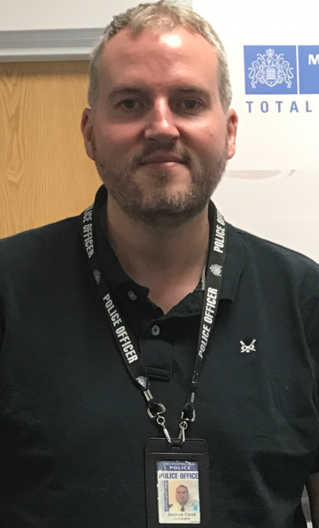
DOCO Josh Cook commended for his work building relationships with Croydon Council and local communities
“Josh exemplifies the resilience and determination of a new DOCO, overcoming setbacks to deliver tangible improvements for the public, SBD, and the London DOCO team. His work is a model of dedication and impact in challenging circumstances”
This was the nomination, DOCO (Designing out Crime Officer), Joshua Cook at the Met received which led to him being awarded a commendation at this year’s ATLAS25.
Police CPI wanted to find out more…
Well done for your award Josh. How long have you worked as a DOCO?
I wanted to be a DOCO for a while, finally a job came up and I started in January 2020, but I was immediately seconded on attachment to the Violent Crime Fugitive Unit for 6 months. When I came back we were in lockdown so I spent my next few months on a laptop at home trying to understand and learn all the design guides and what a PPS was (Police Preferred Specification) . It was hard work! Initially I worked alongside a colleague as a second DOCO, but since January 2023 I’ve been the sole DOCO for Bromley and Croydon.
When did you join the police?
I joined the Metropolitan Police in 2003 before that I worked in various jobs including being a maintenance man in a home for adults with learning difficulties. I started as a PCSO (Police Community Support Officer) in Lambeth, then became a Constable in Camden between 2009-2018. After that, I worked as an Emergency Preparedness Officer dealing with major incidents, but didn’t enjoy it much.
Luckily, I had a chance meeting with the late Jim Cope (Ex NW DOCO) and he told me how great the DOCO role was!
I’ve always been interested in crime prevention so it was a natural step for me to become a DOCO. I wasn’t happy just giving victims a crime reference number, I wanted to give them the tools to help make their homes more secure. It felt that I was more invested in the victim.
Do you enjoy your job as a DOCO?
At the end of every year when I have to do my job review I always say I love being a DOCO and this is the job for me. It’s also perfect for work life balance as I have a young son and it allows me to have most weekends off with him.
If you think about it too, some urban planning projects can take up to 10 years to complete, so hopefully I’ll be here for a while…
What difference have you made as a DOCO?
I think it took me 2 years to really learn the ropes and fully understand the job. I’d say the biggest impact I’ve had is building relationships with Croydon council. Previously we had no relationship with them whatsoever and they had no buy in to SBD (Secured by Design) or the value of a DOCO. I made it my mission to change this but it took a long time, a lot of effort - and I had to buy quite a lot of donuts!
I started off coming in to the violent reduction/safeguarding team in the council offices and eventually helped convince them that we could make a difference in ‘designing out crime’. I’m proud to say now SBD has been adopted into the planning conditions and the council now come to me for advice, I help agree on what is being installed, I review the application forms and sign off the projects. It’s a real milestone.
What projects are in the pipeline?
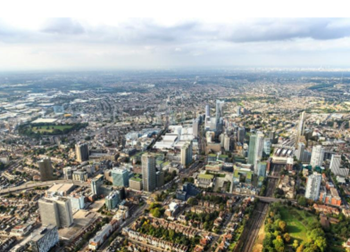
Croydon’s been described as one of the most violent boroughs in London with one of the highest populations. There are areas of poverty and homelessness, there’s a lot of gang activity and drugs are a huge problem. To help regenerate the area and hopefully build more of a community, there are a couple of huge projects happening.
The first is the regeneration of the town centre, it’s a £520 million pound programme to rebuild and improve the centre with retail outlets, leisure and public spaces, 10,000 homes, 2.8 million square metres of office space. It’s going to take 12 years and I’ve been involved with this right from the start, it’s huge. I’ll be advising on where to put lighting, alleyways, seating, trees to help sight lines as well as physical security in and around buildings. I’ll be recommending SBD products for example for a residential tower block with 676 homes which includes a nursery and health clinic.
I’m also currently advising on the Crystal Palace football club redevelopment project to build a new Main Stand with 8,000 seats, enhanced facilities and retail spaces. Working closely with the club and council planning I’m advising on internal and external security, access for fans, turnstiles for the increased footfall and other measures.

Your work doesn’t stop there though does it?
Every Monday I meet with the ASB team (Anti-Social Behaviour) and homeless council teams to offer guidance and help in any way I can. I also meet every other week with the town planners to discuss developments. I enjoy building relationships in the community, and am a link to all these different organisations.
Sometimes it’s easier for me to approach people as I’m not in uniform and I’m normally wearing a hard hat instead of beat hat! I also really enjoy making a difference. I don’t have to be out catching criminals, instead I can be sitting on a beach knowing that I made that home safer, or that office block more secure.
Finally, what don’t many people know about you?
Before joining the Police, I lived in Africa for two years, I spent time in Uganda and Kenya improving the infrastructure and also helping to build schools and a hospital. It was an amazing experience.
What is Secured by Design?
Secured by Design (SBD) is the official police security initiative that works to improve the security of buildings and their immediate surroundings to provide safe places to live, work, shop and visit.
SBD’s product based accreditation scheme – the Police Preferred Specification - provides a recognised standard for all security products that can deter and reduce crime.
There are currently many hundreds of companies producing thousands of attack resistant crime prevention products, across 30 different crime categories, which have achieved Police Preferred Specification.
Improved security
Developers around the UK can achieve SBD awards for incorporating crime prevention measures and techniques into their developments in all kinds of building sectors, such as residential, education, health, transport, commercial, retail, sport and leisure. Indeed, SBD can be used as evidence to discharge third-party obligations under Part Q of Schedule 1 (Security) to the English Building Regulations, the Scottish Building Standard 4.13 (Security) and Welsh Building Regulations Part Q (Security – Dwellings). These awards are gained by working with police Designing Out Crime Officers (DOCOs), who advise architects, developers and local authority planners long before construction begins – and continue to provide advice and guidance until the development is complete.
Academic and other research shows that improving standards of security in brand new and refurbished properties, helps deter and reduce crime. Reducing crime and the fear of crime has direct links to better physical and mental well-being, such as with regard to high volume crimes like domestic abuse.
The built environment influences the behaviour of people who work, live, socialise or simply pass through. SBD seeks to create environments where the law-abiding feel safe and secure whilst at the same time causing the criminal or anti-social to feel vulnerable to detection and thereby influence behaviour in a positive way. This continues to be a key objective for SBD.
Find out more about Secured by Design Developers Awards here.
SBD Design Guides
SBD has produced a series of authoritative Design Guides to assist the building, design and construction industry to incorporate security into developments to comply with the Building Regulations in England, Scotland and Wales and meet the requirements of SBD.
These Design Guides, available to download for free at the SBD website, have been updated over the years to keep pace with changing patterns of criminal behaviour and advances in building design and new technology.
They are a valuable source of reference to architects, developers, self-builders, local authority planners and police officers and cover a range of building sectors, including residential, education, health, transport and commercial.
Police Designing Out Crime Officers
DOCOs provide specialist crime reduction advice to the public, businesses and colleagues about premises or property security. They also work with building developers, architects, and council planning departments regarding new developments and refurbishments, to 'design out' crimes like burglary and anti-social behaviour (ASB) by providing advice on street lighting, building and street layout, entrances and exits - as well as preferred standards and specifications for doors, windows, and locks, under the Secured by Design initiative.
DOCOs are able to deliver site specific interventions required to help design out crime in areas that suffer disproportionately from acquisitive crime, based on local crime pattern analysis, police, local authority and community engagement and the collective knowledge and experience of how criminals behave.
DOCOs are specialist problem solvers, working every day to make a positive difference, changing lives for the better and helping people to be safe and secure in their homes.
Contact details for local DOCOs can be found here.