Remington and Pulford Road Development Receives SBD Medium Housing Development Award
A housing development at 80-90 Remington Road and 118 Pulford Road, London, has received the Secured by Design (SBD) Medium Housing Development Award, recognising excellence in designing out crime within a development of 11 to 49 homes.
The development, which comprises 46 residences with 15 parking spaces and secure cycle parking, has also previously achieved an SBD Gold Award. It was supported by Metropolitan Police Service Designing Out Crime Officer (DOCO) Lee Warwick, who worked closely with Formation Design & Build throughout the scheme.
Formation Design & Build developed a strong working relationship with the North East London DOCO team, with crime prevention principles considered from the earliest concept stages rather than being introduced later in the process. This early engagement allowed key security measures, including natural surveillance, access control, lighting and defensible space, to be incorporated in a way that complemented the scheme’s architectural qualities.
The partnership between the developer and DOCO Lee Warkwick was described as solution-focused and collaborative, balancing security requirements with design quality, functionality and buildability. This approach helped to streamline the approval process, reduce redesign and deliver a development that provides long-term benefits for residents and the wider community.
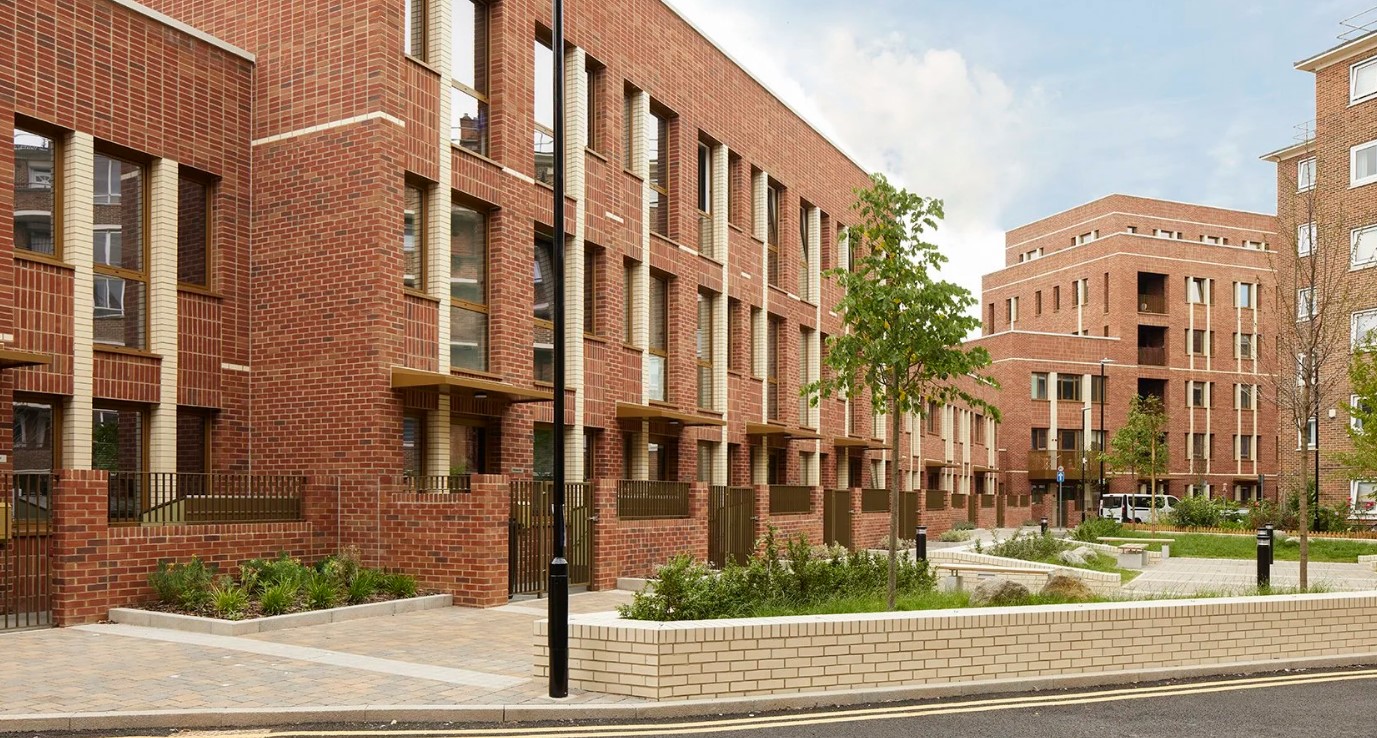
One area where crime prevention advice shaped the final scheme was the design of the public realm. Particular attention was given to ensuring that boundary treatments, low walls and planting enhanced the street scene without creating opportunities for crime or anti-social behaviour. Wherever possible, views through the development were kept clear and unobstructed to support natural surveillance and create a safe environment.
The scheme also presented a number of challenges during the design and construction process. At an early stage, discussions were needed around the importance of specifying appropriately rated communal entrance doors, even where the number of units might not automatically require them. As a local authority development, the scheme also had to balance aesthetic aspirations and last-minute design requirements with the practical realities of delivering the project. Formation Build & Design was commended for its understanding of these challenges and its willingness to work collaboratively to resolve them.
Another constraint was the presence of a nearby Victorian power station building, which affected natural surveillance and the flow of the street. As this feature could not be removed, careful boundary and fencing design was used to reduce its impact on the development. Construction was also affected by the discovery of original Victorian tramlines beneath the site, accessed via an undercroft from Seven Sisters Road, which required further investigation and slowed progress on site.
Despite the development’s proximity to Seven Sisters Road, Seven Sisters Station and other nearby locations associated with higher levels of crime, only one cycle theft was recorded at the site in the 18 months prior to the award submission. In the context of its location, this was highlighted as a positive reflection of the scheme’s design and security measures.
The submission also pointed to the wider quality of the development, which has already been recognised through a Housing Design Award, finalist status in the Civic Trust Awards and a highly commended placing in the BDA Awards. However, it was the way in which security had been embedded as a core design principle, rather than treated as an afterthought, that set the scheme apart for the ATLAS award it received.
By successfully integrating Designing Out Crime principles into a development that is both safe and architecturally strong, the Remington and Pulford Road development was recognised as a best-practice example of how security, aesthetics and community wellbeing can work together to create a high-quality living environment.
DOCO Lee Warwick said: “I have worked with Formation for a number of years on several Haringey developments and it never ceases to surprise me how quick, professional and efficient they are at completing a development. They have an excellent understanding of the security requirements and have deservedly been awarded SBD Gold on all the developments we have worked together on.”
A spokesperson for the developer Formation added: “Remington, now Rowan Court, shows what can be achieved when security for residents is put first. Working closely with Lee and the Designing Out Crime team, alongside Haringey Council, we transformed a site of disused garages into 46 social rent homes with well-overlooked streets, a safe new pedestrian route to the underpass and clearly defined communal spaces. This recognition at ATLAS is a credit to the whole team.”
The ATLAS Development Awards recognise developments that demonstrate excellence in designing out crime and creating safe, secure environments through effective partnership working and the application of Secured by Design principles.
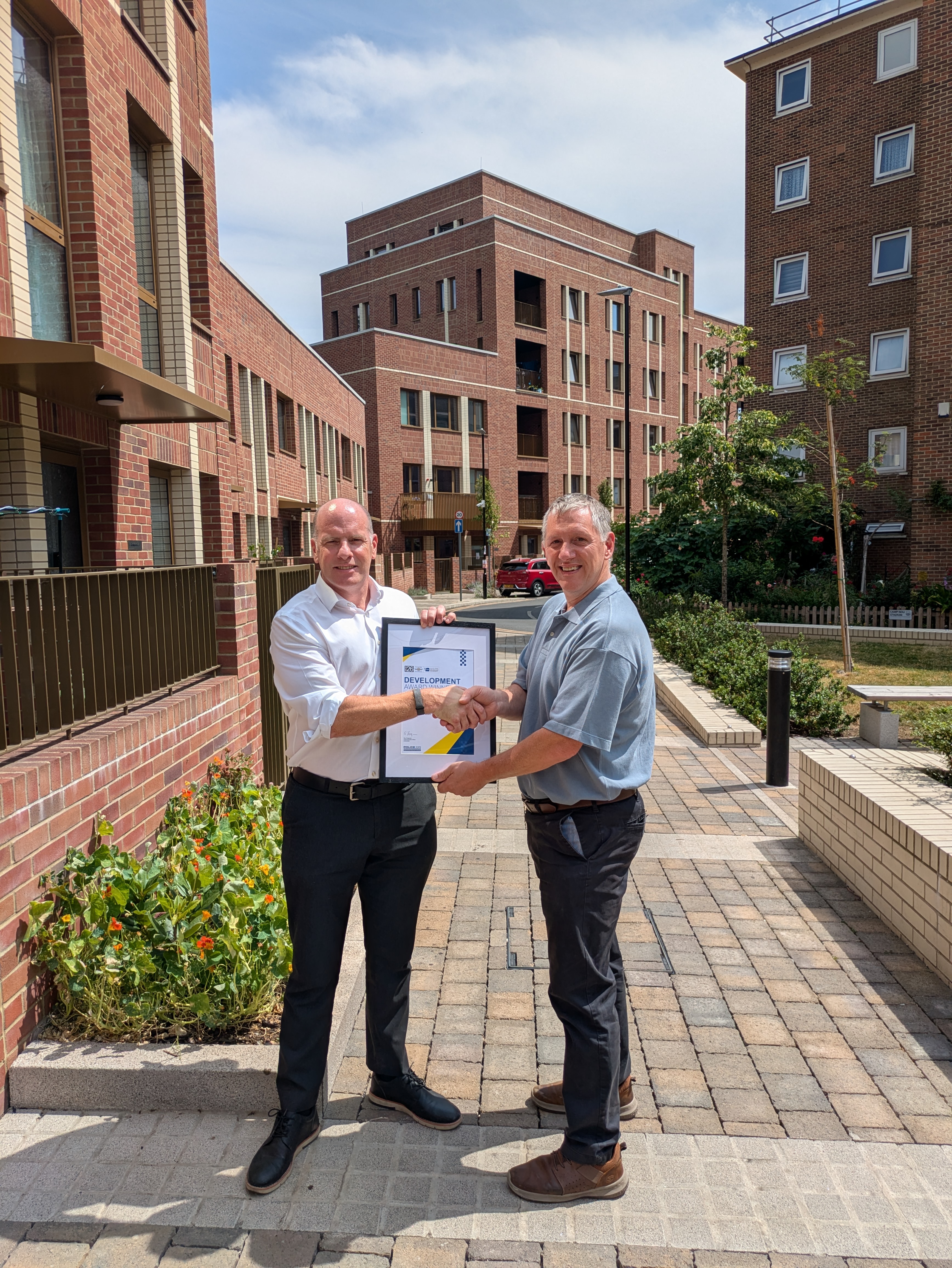
DOCO Lee Warwick was presented the award at the annual Secured by Design ATLAS conference by Police CPI CEO Guy Ferguson and Chief Constable Lauren Poultney of South Yorkshire Police.
What is Secured by Design?
Secured by Design (SBD) is the official police security initiative that works to improve the security of buildings and their immediate surroundings to provide safe places to live, work, shop and visit.
SBD’s product based accreditation scheme - the Police Preferred Specification - provides a recognised standard for all security products that can deter and reduce crime.
There are currently many hundreds of companies producing thousands of attack resistant crime prevention products, across 30 different crime categories, which have achieved Police Preferred Specification.
Improved security
Developers around the UK can achieve SBD awards for incorporating crime prevention measures and techniques into their developments in all kinds of building sectors, such as residential, education, health, transport, commercial, retail, sport and leisure. SBD can be used as evidence to discharge third-party obligations under Part Q of Schedule 1 (Security) to the English Building Regulations, the Scottish Building Standard 4.13 (Security) and Welsh Building Regulations Part Q (Security – Dwellings). These awards are gained by working with police Designing Out Crime Officers (DOCOs), who advise architects, developers and local authority planners long before construction begins – and continue to provide advice and guidance until the development is complete.
Academic and other research shows that improving standards of security in brand new and refurbished properties, helps deter and reduce crime. Reducing crime and the fear of crime has direct links to better physical and mental well-being, such as with regard to high volume crimes like domestic abuse.
The built environment influences the behaviour of people who work, live, socialise or simply pass through. SBD seeks to create environments where the law-abiding feel safe and secure whilst at the same time causing the criminal or anti-social to feel vulnerable to detection and thereby influence behaviour in a positive way. This continues to be a key objective for SBD.
Find out more about SBD Developers Awards here.
SBD Design Guides
SBD has produced a series of Design Guides to assist the building, design and construction industry to incorporate security into developments to comply with the Building Regulations in England, Scotland and Wales and meet the requirements of SBD.
These Design Guides, available to download for free at the SBD website, have been updated over the years to keep pace with changing patterns of criminal behaviour and advances in building design and new technology.
They are a valuable source of reference to architects, developers, self-builders, local authority planners and police officers and cover a range of building sectors, including residential, education, health, transport and commercial.
Police Designing Out Crime Officers (DOCOs)
DOCOs provide specialist crime reduction advice to the public, businesses and colleagues about premises or property security. They also work with building developers, architects, and council planning departments regarding new developments and refurbishments, to 'design out' crimes like burglary and anti-social behaviour (ASB) by providing advice on street lighting, building and street layout, entrances and exits - as well as preferred standards and specifications for doors, windows, and locks, under the Secured by Design initiative.
DOCOs are able to deliver site specific interventions required to help design out crime in areas that suffer disproportionately from acquisitive crime, based on local crime pattern analysis, police, local authority and community engagement and the collective knowledge and experience of how criminals behave.
DOCOs are specialist problem solvers, working every day to make a positive difference, changing lives for the better and helping people to be safe and secure in their homes.
Contact details for local DOCOs can be found here.