Designing Out Crime at Iconic Oval Village Development
The Oval Village Gasworks development in London has won the Superscale Development Award at the Secured by Design (SBD) ATLAS 2026 Awards, recognising the extensive work undertaken to incorporate crime prevention and security measures into one of London’s most distinctive new developments.
Designing Out Crime Officer (DOCO) Sean Hathaway of the Metropolitan Police Service has been involved with the development since the initial planning consultations in 2016, working with the developer, architects and other partners as the 1,400-home scheme progressed through seven phases.
The development comprises eight blocks and includes residential accommodation alongside a gym, cinema, shops, retail and hotel space. All car parking is provided in secure underground areas with CCTV and fire suppression, while dedicated cycle stores are located within each block. Provision has also been made for electric bike charging, with additional fire suppression, ventilation and smoke extraction systems.
The development has achieved an SBD Gold Award, with Designing Out Crime principles incorporated throughout the scheme.
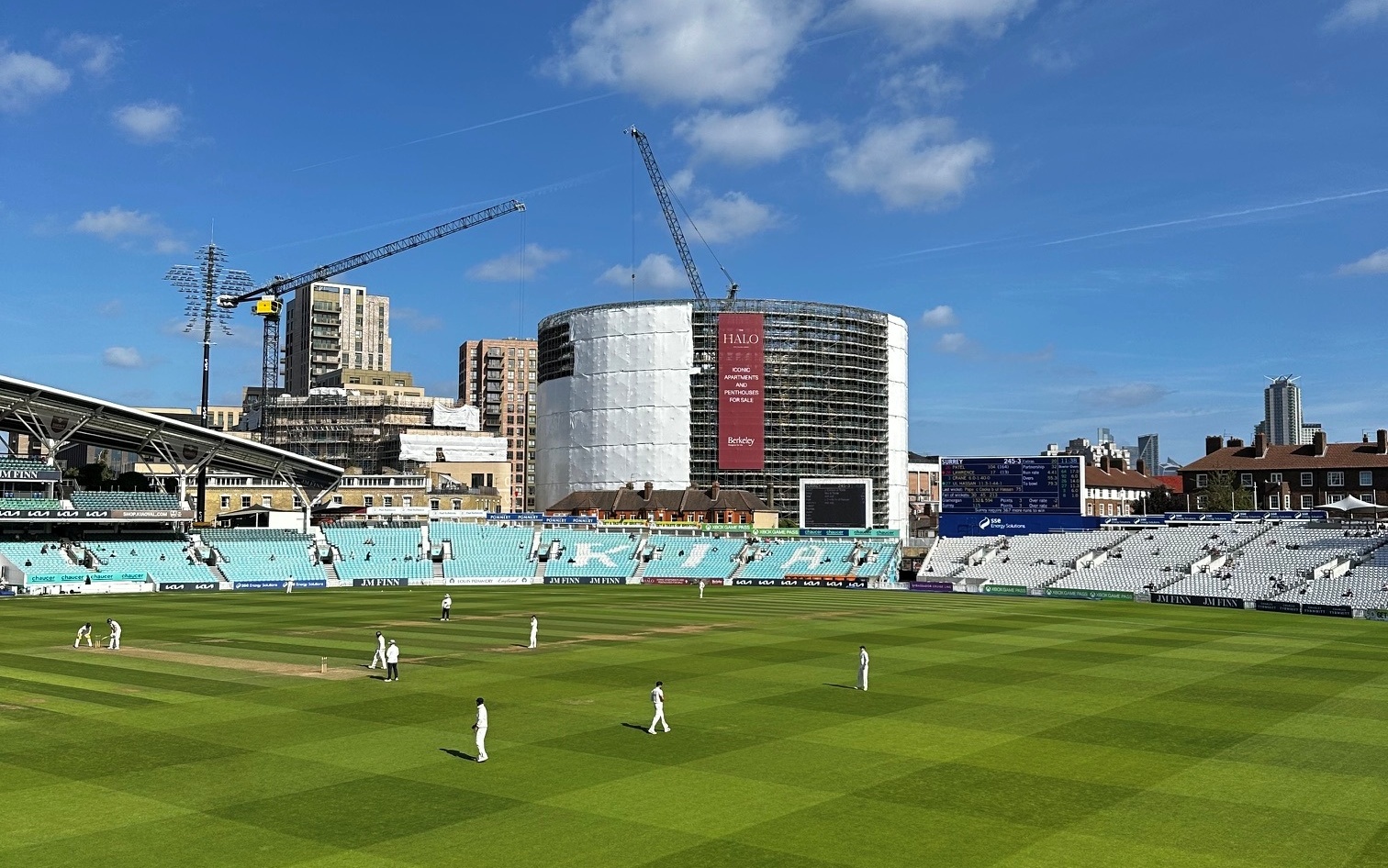
One of the most unusual challenges was presented by Block G, which incorporates the original gas holder frame as a key architectural feature. The retained structure is highly visible from the nearby Oval cricket ground and has become an important part of the development's identity.
Sean identified the potential for the frame to be climbed, creating both a significant safety and security risk and the possibility of the structure being used for unauthorised activity or protest. Initially, there was some reluctance to believe that the structure could be climbed, but Sean sourced evidence of previous climbs by urban explorers, helping to demonstrate the risk and bring the issue into focus.
Addressing the issue required extensive collaboration with Berkeley Homes and English Heritage, as the original gas holder frame is listed. Through multiple meetings and discussions, measures were agreed to reduce the risk of climbing while retaining the architectural character of the structure. These included higher piers and pillars around the base of the gas frame, alongside additional anti-climb measures.
Additional security arrangements are also put in place on Test match days, when the Oval Village development employs security staff to patrol the gas frame.
Across the wider development, SBD-compliant doors were installed to terraces throughout Block G, helping to address the particular risks associated with the building's unusual design and configuration.
The development is located within the Kennington and Oval ward of Lambeth, an area experiencing significant levels of recorded crime. In the 12 months to the start of 2026, the ward recorded 76 burglaries, 50 vehicle crimes, 40 bicycle thefts, 67 criminal damage and arson offences and 319 incidents of anti-social behaviour, alongside other offences.
Against this backdrop, the scale and complexity of the development made the early and continued involvement of the Designing Out Crime Officer particularly important. Sean's engagement over almost a decade allowed security considerations to be addressed as the development evolved, with solutions developed collaboratively to balance security, safety and the architectural vision.
The Oval Village Gasworks is set to become a distinctive part of London's skyline, with its iconic gas holder frame visible during international cricket matches at the Oval for years to come. The ATLAS judges recognised the thorough application of SBD requirements and Crime Prevention Through Environmental Design principles across the development, together with the collaborative approach that has helped deliver a large-scale development that is both distinctive and secure.
DOCO Sean Hathaway said: “It has been my absolute privilege to work with Berkeley Homes at the Oval Gasworks Village. The MPS DOCO Team have been involved since the pre-application and initial planning application RIBA1 stage. This has afforded us every opportunity to provide Crime Prevention Through Environmental Design advice according to the SBD guides. Superscale developments such as this are very rare. Iconic developments on a super scale are ‘once-in-a-lifetime’ jobs for a DOCO.”
The ATLAS Development Awards recognise developments that demonstrate excellence in designing out crime and creating safe, secure environments through effective partnership working and the application of Secured by Design principles.
DOCO Sean Hathaway was presented the award at the annual Secured by Design ATLAS conference by Police CPI CEO Guy Ferguson and Chief Constable Lauren Poultney of South Yorkshire Police.
What is Secured by Design?
Secured by Design (SBD) is the official police security initiative that works to improve the security of buildings and their immediate surroundings to provide safe places to live, work, shop and visit.
SBD’s product based accreditation scheme - the Police Preferred Specification - provides a recognised standard for all security products that can deter and reduce crime.
There are currently many hundreds of companies producing thousands of attack resistant crime prevention products, across 30 different crime categories, which have achieved Police Preferred Specification.
Improved security
Developers around the UK can achieve SBD awards for incorporating crime prevention measures and techniques into their developments in all kinds of building sectors, such as residential, education, health, transport, commercial, retail, sport and leisure. SBD can be used as evidence to discharge third-party obligations under Part Q of Schedule 1 (Security) to the English Building Regulations, the Scottish Building Standard 4.13 (Security) and Welsh Building Regulations Part Q (Security – Dwellings). These awards are gained by working with police Designing Out Crime Officers (DOCOs), who advise architects, developers and local authority planners long before construction begins – and continue to provide advice and guidance until the development is complete.
Academic and other research shows that improving standards of security in brand new and refurbished properties, helps deter and reduce crime. Reducing crime and the fear of crime has direct links to better physical and mental well-being, such as with regard to high volume crimes like domestic abuse.
The built environment influences the behaviour of people who work, live, socialise or simply pass through. SBD seeks to create environments where the law-abiding feel safe and secure whilst at the same time causing the criminal or anti-social to feel vulnerable to detection and thereby influence behaviour in a positive way. This continues to be a key objective for SBD.
Find out more about SBD Developers Awards here.
SBD Design Guides
SBD has produced a series of Design Guides to assist the building, design and construction industry to incorporate security into developments to comply with the Building Regulations in England, Scotland and Wales and meet the requirements of SBD.
These Design Guides, available to download for free at the SBD website, have been updated over the years to keep pace with changing patterns of criminal behaviour and advances in building design and new technology.
They are a valuable source of reference to architects, developers, self-builders, local authority planners and police officers and cover a range of building sectors, including residential, education, health, transport and commercial.
Police Designing Out Crime Officers (DOCOs)
DOCOs provide specialist crime reduction advice to the public, businesses and colleagues about premises or property security. They also work with building developers, architects, and council planning departments regarding new developments and refurbishments, to 'design out' crimes like burglary and anti-social behaviour (ASB) by providing advice on street lighting, building and street layout, entrances and exits - as well as preferred standards and specifications for doors, windows, and locks, under the Secured by Design initiative.
DOCOs are able to deliver site specific interventions required to help design out crime in areas that suffer disproportionately from acquisitive crime, based on local crime pattern analysis, police, local authority and community engagement and the collective knowledge and experience of how criminals behave.
DOCOs are specialist problem solvers, working every day to make a positive difference, changing lives for the better and helping people to be safe and secure in their homes.
Contact details for local DOCOs can be found here.